
Leak Detection & Repair in San Antonio, TX — Request a Connection
Request a connection with an independent local plumbing provider in the San Antonio area.
Emergency Leak Detection & Repair in San Antonio, TX connects homeowners with verified, licensed independent plumbing providers. Available 24/7 with 45-minute dispatch targets and upfront pricing.
PlumbRoute is a referral service, not a plumbing contractor. Coverage varies by availability.
Why this is common in San Antonio
San Antonio sits in a part of Central Texas known for clay-heavy soils that expand when wet and contract during dry periods, a pattern documented by state and federal soil resources. That shifting can put stress on underground water and sewer lines as well as slab foundations, particularly in older homes, and is a recognized contributor to hidden leaks over time.
Given the mix of established and newer housing across the area, hidden leaks can develop gradually and may not always be obvious until they cause visible damage, so many are only caught through inspection. San Antonio's leak-repair risk isn't only a winter story -- it's a soil story that runs in both directions. USDA's official series description for Houston Black clay, the dominant soil across much of Bexar County per Texas A&M AgriLife Extension's Master Naturalist program, documents 40-60% clay content and very high shrink-swell potential, with cracks up to 4 inches wide opening to a foot or more deep during dry spells.
SAWS officials have pointed to this same swelling-and-shrinking cycle as a driver behind the utility's record 2023 water-main-break season, when heat and drought dried and shifted soil enough to stress pipe joints. The same movement can affect buried pipe and slab foundations on private property, and with roughly six in ten area homes built before 1990, a meaningful share sit on older supply-line materials that are less tolerant of that repeated shifting.
What San Antonio homeowners should know
San Antonio leak risk is closely tied to what's underground -- the region's expansive clay soil shifts with wet-dry cycles and stresses buried pipe joints.
More detail
San Antonio leak risk is closely tied to what's underground, not just what's inside the walls. Much of Bexar County sits on Houston Black clay, a soil that USDA's official series description classifies as having 40-60% clay content and very high shrink-swell potential -- it can crack up to 4 inches wide and a foot or more deep during dry periods, then swell again when it rains.
San Antonio Water System officials have pointed to this same swelling-and-shrinking cycle as a leading driver behind the utility's record 2023 water-main-break season, when intense heat and drought dried and shifted soil enough to stress pipe joints across the city. The same underground movement that affects municipal mains can also stress buried supply lines and slab foundations on private property, particularly older ones: roughly six in ten San Antonio-area homes were built before 1990, an era when materials like galvanized steel and, later, polybutylene were common and are now considered more leak-prone with age.
None of this means every older home will develop a leak, but it's a reasonable basis for periodic inspection, especially after a stretch of drought followed by heavy rain. A licensed local plumber can assess buried lines, slab areas, and supply pipe condition; recommended repairs and pricing vary by provider and by what's found.
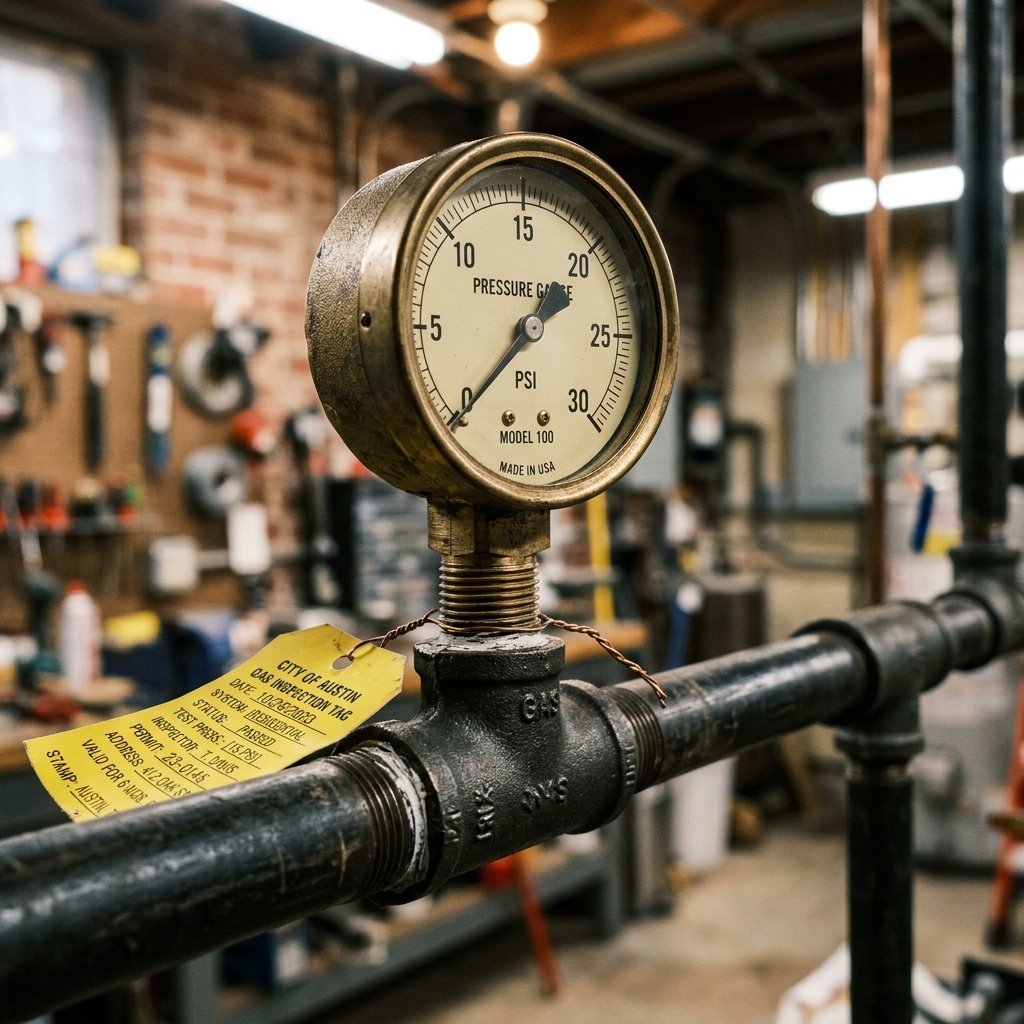
Equipment Standards & Failure Forensics in San Antonio
High-resolution diagnostic photography and technical field diagnostics documented across Southwestern residential service calls, illustrating equipment tolerances and local failure modes.

Estimate Repair Costs in San Antonio
PlumbRoute is a referral service, not a plumbing contractor.
What affects the cost in San Antonio
Leak detection and repair costs in San Antonio depend on the leak's location and severity. Non-invasive detection — acoustic or thermal-imaging equipment used to pinpoint a hidden leak without cutting into walls or slabs — typically runs $350–$650. A direct spot repair, opening a small, targeted section to fix the leak, generally costs $1,800–$3,500.
For leaks in extensively damaged or hard-to-access lines, rerouting new piping through walls or ceilings instead of repairing the original line commonly runs $2,500–$5,500. Your responding provider confirms exact pricing after locating and assessing the leak.
Service area
PlumbRoute is arranging provider coverage across the greater San Antonio area, including Alamo Heights, Stone Oak, King William, Monte Vista, the Helotes border area, and the Medical Center district, with coverage extending to surrounding communities as well. Specific neighborhood or ZIP-level availability is confirmed when you request a connection, since it depends on the responding provider's current capacity.
Frequently asked questions
Need leak detection & repair in San Antonio?
Request a connection with an independent local provider.
PlumbRoute is a referral service, not a plumbing contractor.
Request an Estimate
Tell us about your project so a local provider can follow up with pricing.