Why Is My Water Bill So High? (Signs of a Hidden Leak)
Normal Reasons Your Water Bill Might Go Up
Not every spike points to a leak. Seasonal irrigation, houseguests, filling a pool, or a new water-using appliance can all raise usage. It is worth ruling these out first before assuming something is wrong.
Signs You Might Have a Hidden Leak
A few signals are worth paying attention to:
- The sound of running water when every fixture in the house is off
- Damp or discolored patches on walls, ceilings, or flooring with no obvious cause
- A musty smell that does not go away
- Your water bill trending upward over a few billing cycles without a clear reason
How to Do a Simple Water Meter Test
Make sure no water is being used anywhere in the home, then locate your water meter and note the reading. Wait 1–2 hours without using any water, and check the reading again. If it has changed, water is flowing somewhere in the system even though nothing is turned on — a strong sign of a hidden leak.
Where Hidden Leaks Commonly Hide
Hidden leaks are not always visible. They can occur inside walls, under a slab foundation, or in the underground line running from the water meter to the house. These locations are exactly why a hidden leak can go unnoticed for a while — and why detection equipment is often needed to pinpoint the source without unnecessary digging or demolition.
15.0 PSI Certified Pressure Leak Test
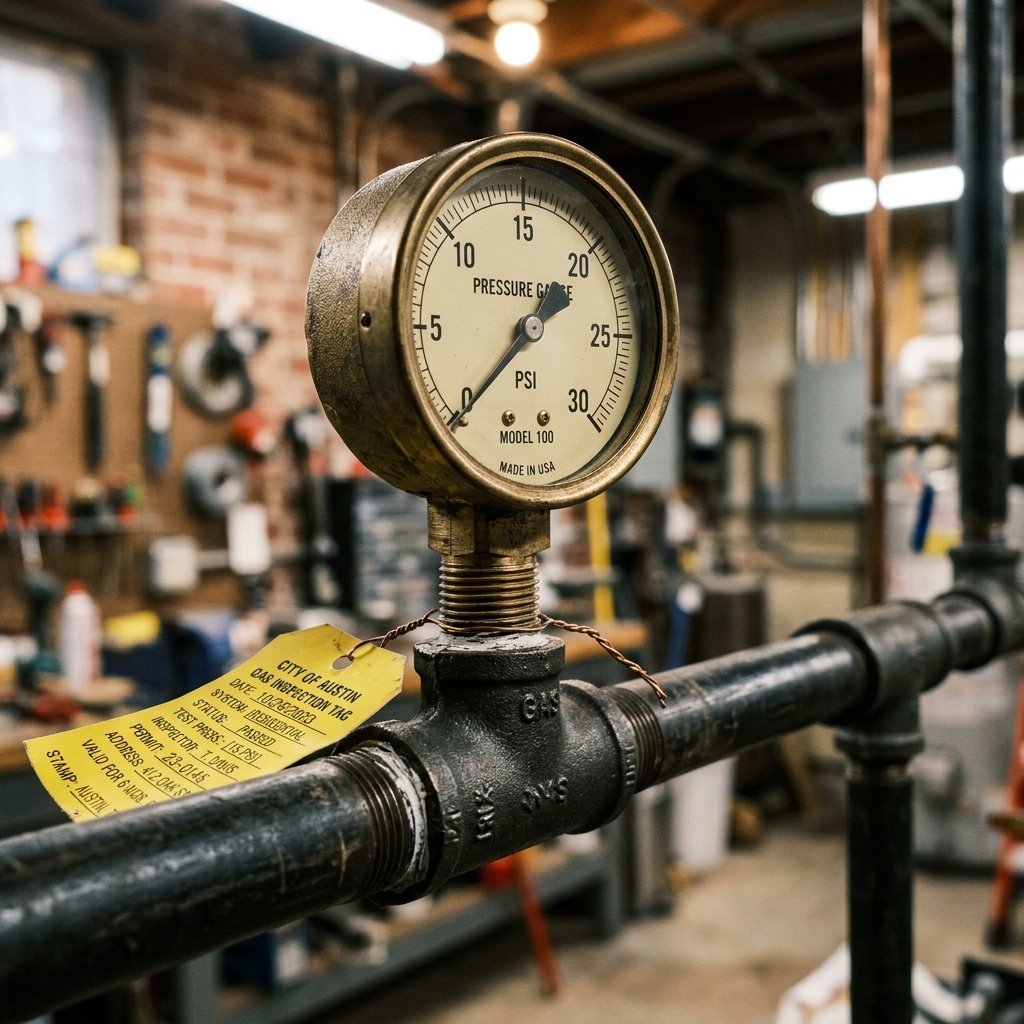
Mil-spec 30-minute mechanical dial test gauge inspection confirming zero manifold pressure loss on natural gas line, tagged with municipal safety inspection certification.
Still dealing with this issue? You can request a connection with an independent local plumbing provider — there is no fee to submit a request.
Request a ConnectionFrequently asked questions
Looking for leak repair in your area?
PlumbRoute is a referral service -- request a connection with an independent local plumber serving one of these areas:
24/7 Verified Dispatch · Phoenix AreaLeak Detection & Repair in Scottsdale, AZ
24/7 Verified Dispatch · Scottsdale AreaLeak Detection & Repair in Dallas, TX
24/7 Verified Dispatch · Dallas AreaLeak Detection & Repair in Fort Worth, TX
24/7 Verified Dispatch · Fort Worth AreaLeak Detection & Repair in Plano, TX
24/7 Verified Dispatch · Plano AreaLeak Detection & Repair in Frisco, TX
24/7 Verified Dispatch · Frisco AreaLeak Detection & Repair in Houston, TX
24/7 Verified Dispatch · Houston AreaLeak Detection & Repair in Austin, TX
24/7 Verified Dispatch · Austin AreaLeak Detection & Repair in San Antonio, TX
24/7 Verified Dispatch · San Antonio AreaLeak Detection & Repair in San Diego, CA
24/7 Verified Dispatch · San Diego Area
Need help with this?
Request a connection with an independent local plumbing provider.
PlumbRoute is a referral service, not a plumbing contractor.
Request an Estimate
Tell us about your project so a local provider can follow up with pricing.