How to Fix a Clogged Drain
Start With the Safe DIY Basics
For a simple clog, a plunger is often the first thing worth trying — the same cup-style plunger used for sinks and tubs can create enough pressure to dislodge a minor blockage. Running hot water combined with a small amount of dish soap can also help break down grease-based clogs in a kitchen sink.
Try a Natural Approach Before Chemicals
Baking soda followed by white vinegar, left to sit for 15–20 minutes and then flushed with hot water, is a common next step. It is worth avoiding harsh chemical drain cleaners, especially if you think you may need a professional visit afterward — those chemicals can make the clog more difficult and less safe to clear by hand.
When a Drain Snake Might Help
If the clog is further down the line, a manual drain snake (also called a plumbing auger) can sometimes reach and clear it. This tool takes some care to use correctly, and it is not always the right fit for every situation — particularly older pipes, which can be more prone to damage from an improperly used snake.
Signs the Clog Is Deeper Than a Simple Blockage
A few signs suggest the issue may be beyond a simple DIY fix:
- Multiple drains in the house are slow or backing up at the same time
- The same drain keeps clogging repeatedly, even after clearing it
- You hear gurgling from other fixtures when using one drain
- Water backs up instead of draining at all
These patterns often point to a blockage further down the line rather than something local to one fixture.
4,000 PSI High-Velocity Hydro-Jetting Action
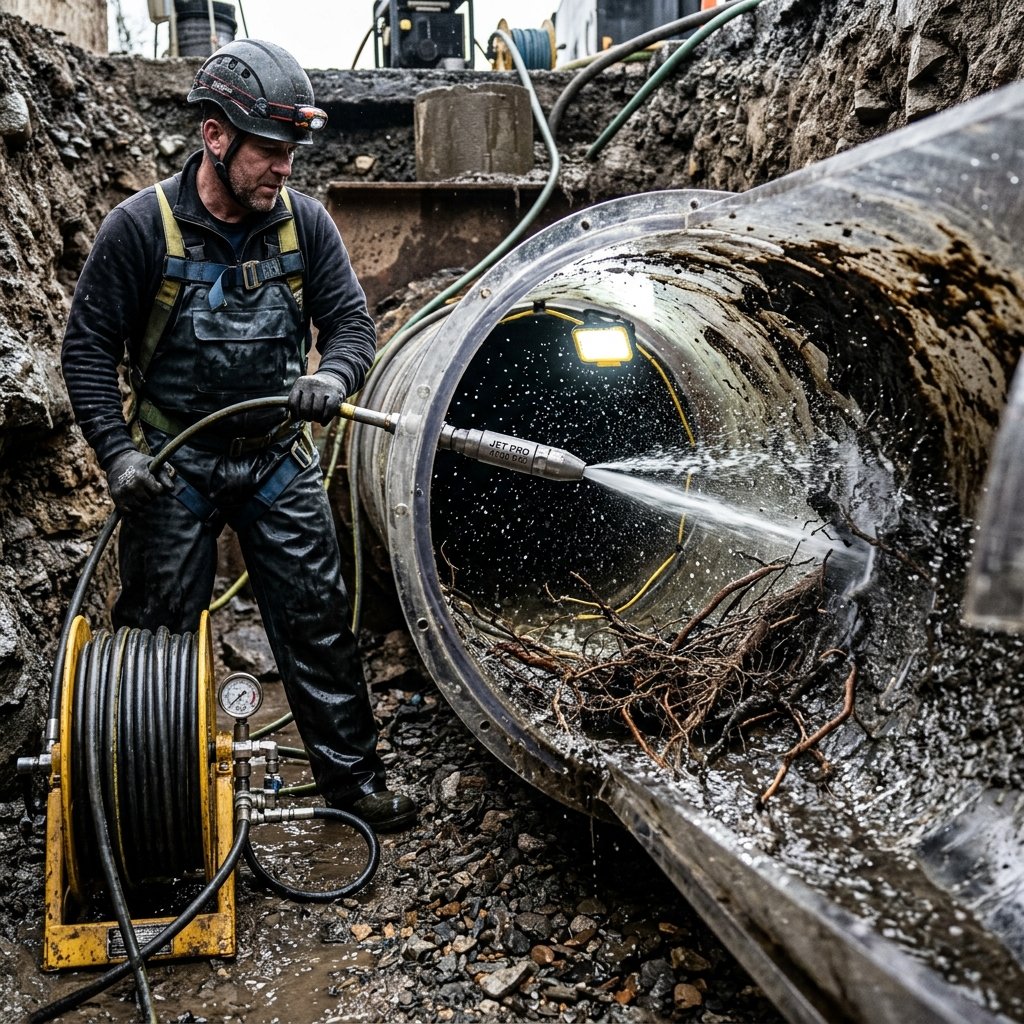
High-speed capture of stainless multi-directional forward penetrator nozzle obliterating stubborn tree root mass and calcified sludge inside transparent 4" sewer lateral.
Still dealing with this issue? You can request a connection with an independent local plumbing provider — there is no fee to submit a request.
Request a ConnectionFrequently asked questions
Looking for drain cleaning in your area?
PlumbRoute is a referral service -- request a connection with an independent local plumber serving one of these areas:
24/7 Verified Dispatch · Phoenix AreaDrain Cleaning & Clearing in Scottsdale, AZ
24/7 Verified Dispatch · Scottsdale AreaDrain Cleaning & Clearing in Dallas, TX
24/7 Verified Dispatch · Dallas AreaDrain Cleaning & Clearing in Fort Worth, TX
24/7 Verified Dispatch · Fort Worth AreaDrain Cleaning & Clearing in Plano, TX
24/7 Verified Dispatch · Plano AreaDrain Cleaning & Clearing in Frisco, TX
24/7 Verified Dispatch · Frisco AreaDrain Cleaning & Clearing in Houston, TX
24/7 Verified Dispatch · Houston AreaDrain Cleaning & Clearing in Austin, TX
24/7 Verified Dispatch · Austin AreaDrain Cleaning & Clearing in San Antonio, TX
24/7 Verified Dispatch · San Antonio AreaDrain Cleaning & Clearing in San Diego, CA
24/7 Verified Dispatch · San Diego Area
Need help with this?
Request a connection with an independent local plumbing provider.
PlumbRoute is a referral service, not a plumbing contractor.
Request an Estimate
Tell us about your project so a local provider can follow up with pricing.