Why Does My House Smell Like Sewer?
The Most Common Cause: A Dry P-Trap
Most fixture drains have a curved section of pipe, the P-trap, that holds a small amount of water to block sewer gas from coming back up through the fixture. If a drain is not used often, like a guest bathroom or a floor drain, that water can evaporate, leaving a direct path for odor. Running water down the drain for a minute is often enough to refill it and resolve the smell.
Other Possible Causes
If refilling P-traps does not help, a few other sources are worth considering:
- A blocked or damaged roof vent stack, which normally lets sewer gas escape safely above the house
- A worn wax ring seal under a toilet
- A crack or blockage further down the sewer line itself
Is Sewer Gas Dangerous?
In small amounts, sewer gas is often just a nuisance odor, though it can irritate the eyes, nose, or throat or cause headaches in some people. In larger, sustained amounts, or in enclosed spaces, it can pose a real health and safety concern, so a strong or worsening smell that does not resolve with simple fixes is worth taking seriously rather than just masking with air freshener.
How to Narrow Down the Source
Notice which room or fixture the smell is strongest near, whether it changes after rain, and whether it is constant or comes and goes. This information helps a provider diagnose the cause more quickly if you do request a connection.
When to Request a Connection
If refilling P-traps throughout the house does not resolve the smell, or if it is accompanied by slow drains, gurgling, or visible sewage backup, it is a reasonable time to request a connection with a local provider rather than continuing to guess at the cause.
4,000 PSI High-Velocity Hydro-Jetting Action
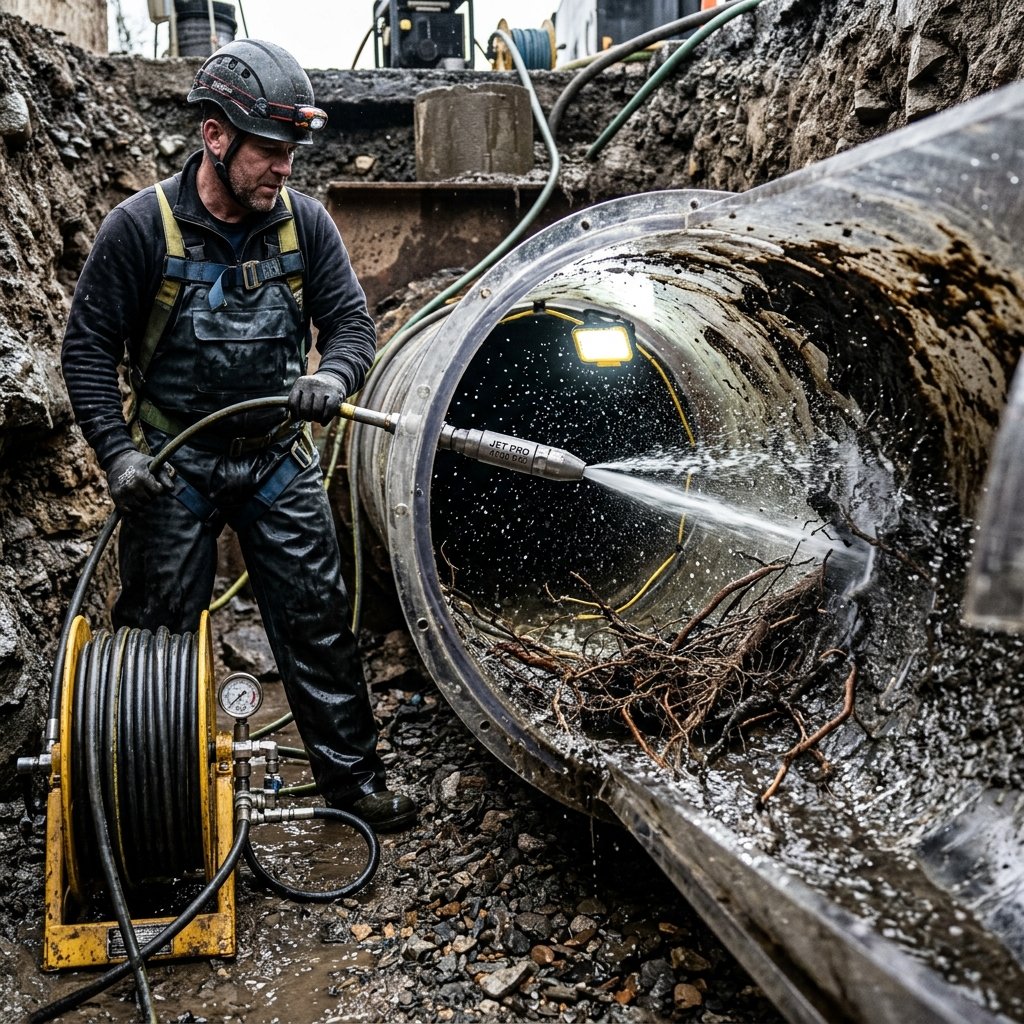
High-speed capture of stainless multi-directional forward penetrator nozzle obliterating stubborn tree root mass and calcified sludge inside transparent 4" sewer lateral.
Still dealing with this issue? You can request a connection with an independent local plumbing provider — there is no fee to submit a request.
Request a ConnectionFrequently asked questions
Looking for sewer line repair in your area?
PlumbRoute is a referral service -- request a connection with an independent local plumber serving one of these areas:
24/7 Verified Dispatch · Phoenix AreaSewer Line Repair & Replacement in Scottsdale, AZ
24/7 Verified Dispatch · Scottsdale AreaSewer Line Repair & Replacement in Dallas, TX
24/7 Verified Dispatch · Dallas AreaSewer Line Repair & Replacement in Fort Worth, TX
24/7 Verified Dispatch · Fort Worth AreaSewer Line Repair & Replacement in Plano, TX
24/7 Verified Dispatch · Plano AreaSewer Line Repair & Replacement in Frisco, TX
24/7 Verified Dispatch · Frisco AreaSewer Line Repair & Replacement in Houston, TX
24/7 Verified Dispatch · Houston AreaSewer Line Repair & Replacement in Austin, TX
24/7 Verified Dispatch · Austin AreaSewer Line Repair & Replacement in San Antonio, TX
24/7 Verified Dispatch · San Antonio AreaSewer Line Repair & Replacement in San Diego, CA
24/7 Verified Dispatch · San Diego Area
Need help with this?
Request a connection with an independent local plumbing provider.
PlumbRoute is a referral service, not a plumbing contractor.
Request an Estimate
Tell us about your project so a local provider can follow up with pricing.