How Do I Know If My Main Sewer Line Is Clogged?
Multiple Drains Backing Up at Once
The clearest sign of a main sewer line clog is when more than one fixture is affected at the same time, for example, the toilet, shower, and a sink all draining slowly or backing up together. Since every fixture in the house eventually feeds into the same main line, a blockage there affects every fixture that drains into it, not just one drain.
Gurgling Sounds From Other Fixtures
If you flush the toilet and hear gurgling from the bathtub or a nearby sink drain, that can be air being pushed back through the system because it cannot escape normally. It is a common symptom of a main line blockage, though a blocked vent or a local clog can cause similar gurgling.
Water Backing Up in an Unexpected Place
Water or sewage backing up into a shower or floor drain when you run the washing machine or flush a toilet is a strong sign of a main line clog. This happens because the blockage forces wastewater to find the lowest available exit point in the system.
What Usually Causes It
Tree root intrusion is a common cause of main sewer line clogs, especially in older homes with clay or other older pipe materials. Aging pipes, grease buildup over time, and foreign objects flushed into the system can also contribute.
What to Do Next
Avoid running more water or using multiple fixtures until the issue is looked at, since that can make a backup worse. A main line clog usually is not something to try clearing with typical store-bought tools, since the blockage is often located well beyond what standard equipment can reach.
4,000 PSI High-Velocity Hydro-Jetting Action
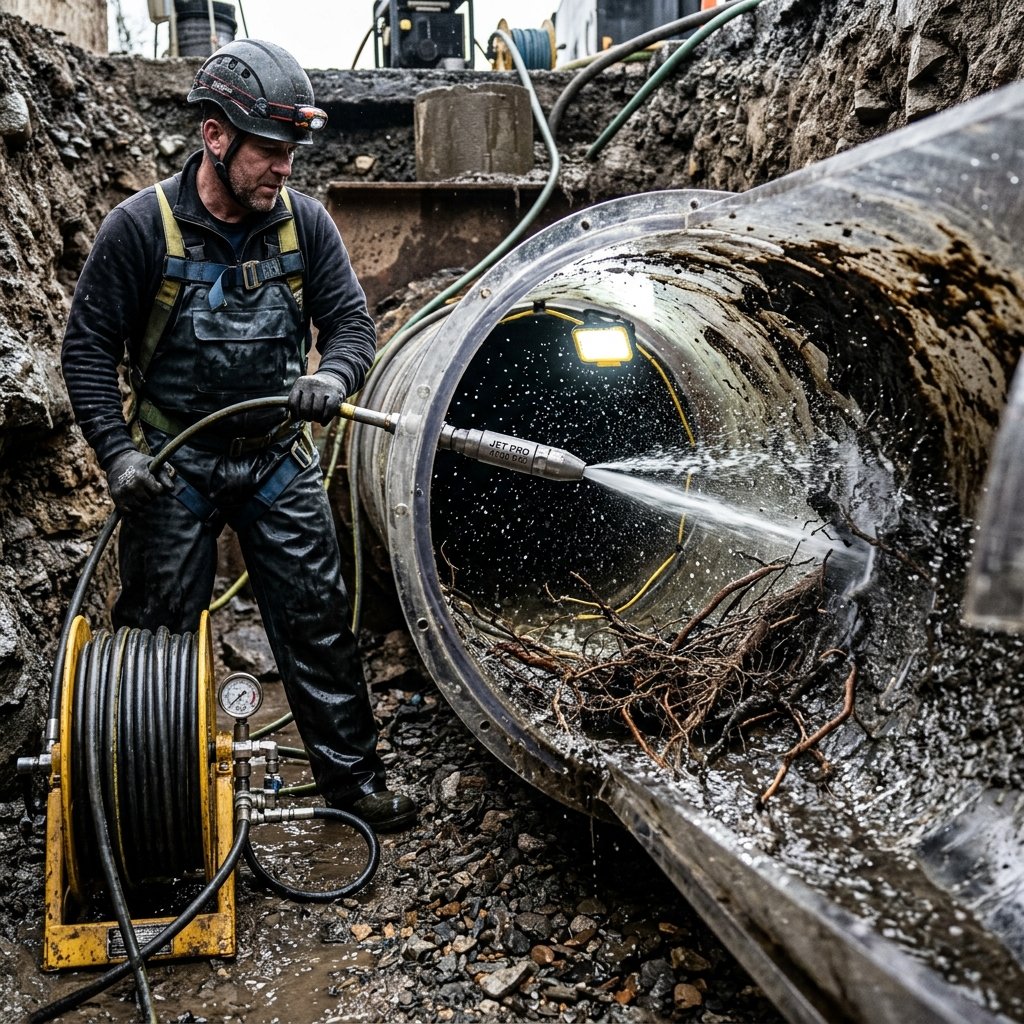
High-speed capture of stainless multi-directional forward penetrator nozzle obliterating stubborn tree root mass and calcified sludge inside transparent 4" sewer lateral.
Still dealing with this issue? You can request a connection with an independent local plumbing provider — there is no fee to submit a request.
Request a ConnectionFrequently asked questions
Looking for sewer line repair in your area?
PlumbRoute is a referral service -- request a connection with an independent local plumber serving one of these areas:
24/7 Verified Dispatch · Phoenix AreaSewer Line Repair & Replacement in Scottsdale, AZ
24/7 Verified Dispatch · Scottsdale AreaSewer Line Repair & Replacement in Dallas, TX
24/7 Verified Dispatch · Dallas AreaSewer Line Repair & Replacement in Fort Worth, TX
24/7 Verified Dispatch · Fort Worth AreaSewer Line Repair & Replacement in Plano, TX
24/7 Verified Dispatch · Plano AreaSewer Line Repair & Replacement in Frisco, TX
24/7 Verified Dispatch · Frisco AreaSewer Line Repair & Replacement in Houston, TX
24/7 Verified Dispatch · Houston AreaSewer Line Repair & Replacement in Austin, TX
24/7 Verified Dispatch · Austin AreaSewer Line Repair & Replacement in San Antonio, TX
24/7 Verified Dispatch · San Antonio AreaSewer Line Repair & Replacement in San Diego, CA
24/7 Verified Dispatch · San Diego Area
Need help with this?
Request a connection with an independent local plumbing provider.
PlumbRoute is a referral service, not a plumbing contractor.
Request an Estimate
Tell us about your project so a local provider can follow up with pricing.