
Why Won’t My Toilet Flush?
Check the Water Level in the Tank
A weak or incomplete flush is often caused by a tank that is not filling with enough water. Lift the tank lid and check that the water level sits close to the fill line marked inside the tank (often about an inch below the top of the overflow tube; follow the marked line in your tank or the manufacturer's instructions if they differ). If it is noticeably low, the fill valve may need adjustment.
The Flapper May Not Be Lifting Fully
If the chain connecting the flush handle to the flapper is too long or has come loose, the flapper may only lift partway when you flush, releasing less water than needed for a full flush. A chain that is too tight can cause the opposite problem, holding the flapper slightly open. Both are quick, low-cost checks.
It Might Be a Clog, Not the Flush Mechanism
If water rises when you flush but does not drain, or drains very slowly, the issue is more likely a clog in the toilet trap or the line beyond it rather than the flush mechanism itself. A plunger is usually the first thing worth trying in this case.
Less Common Causes
Mineral buildup in the small holes under the bowl rim (called rim jets) or in the larger siphon jet opening at the bottom of the bowl can reduce flush performance over time, especially in hard-water areas. A worn-out flush valve or an installation problem such as poor venting of the drain line are less common but possible causes as well.
Turnkey Condensing Tankless Installation
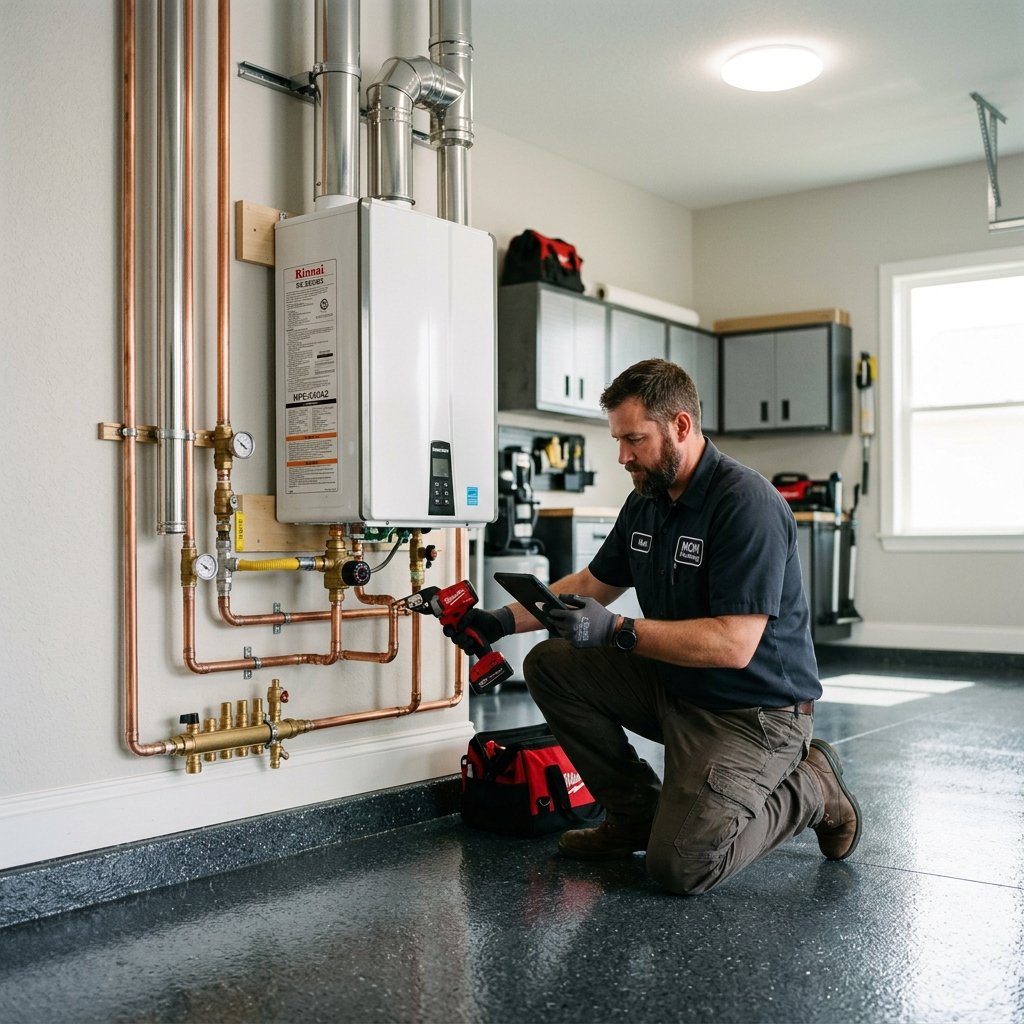
Completed turnkey mechanical utility room installation featuring Navien NPE-240A2 condensing tankless unit, dual service isolation valves, gas drip leg, and PEX-A expansion manifold.
Still dealing with this issue? You can request a connection with an independent local plumbing provider — there is no fee to submit a request.
Request a ConnectionFrequently asked questions
Looking for toilet repair in your area?
PlumbRoute is a referral service -- request a connection with an independent local plumber serving one of these areas:
24/7 Verified Dispatch · Phoenix AreaToilet & Fixture Plumbing in Scottsdale, AZ
24/7 Verified Dispatch · Scottsdale AreaToilet & Fixture Plumbing in Dallas, TX
24/7 Verified Dispatch · Dallas AreaToilet & Fixture Plumbing in Fort Worth, TX
24/7 Verified Dispatch · Fort Worth AreaToilet & Fixture Plumbing in Plano, TX
24/7 Verified Dispatch · Plano AreaToilet & Fixture Plumbing in Frisco, TX
24/7 Verified Dispatch · Frisco AreaToilet & Fixture Plumbing in Houston, TX
24/7 Verified Dispatch · Houston AreaToilet & Fixture Plumbing in Austin, TX
24/7 Verified Dispatch · Austin AreaToilet & Fixture Plumbing in San Antonio, TX
24/7 Verified Dispatch · San Antonio AreaToilet & Fixture Plumbing in San Diego, CA
24/7 Verified Dispatch · San Diego Area
Need help with this?
Request a connection with an independent local plumbing provider.
PlumbRoute is a referral service, not a plumbing contractor.
Request an Estimate
Tell us about your project so a local provider can follow up with pricing.