
How to Flush a Water Heater
Why Flushing Matters
Over time, minerals in your water settle to the bottom of the tank as sediment. That layer acts as insulation between the burner or heating element and the water, making the unit work harder to heat the same amount of water. Left long enough, it can also cause rumbling or popping noises and shorten the tank's overall lifespan.
Before You Start
Turn off the power to the unit, electric at the breaker, gas at the gas control valve, and give the water a few hours to cool if you have used hot water recently. Flushing a still-hot tank risks scalding. You will also want a garden hose long enough to reach a drain or the outdoors.
Step-by-Step: Draining and Flushing
Connect a hose to the drain valve near the bottom of the tank and run it to a floor drain or outside. Turn off the cold water supply to the tank, then open the drain valve and a nearby hot water tap to let air into the system so it drains fully. Once it stops flowing, briefly turn the cold water supply back on to stir up and flush out remaining sediment, then drain again until the water runs clear. Finally, close the drain valve, reopen the cold water supply, and let the tank refill completely before restoring power or relighting the gas, following your unit's manual.
How Often to Do This
Many sources suggest flushing at least once a year, and homes with harder water may benefit from flushing more often. Check your unit's manual for the manufacturer's recommended interval. If a tank has gone several years without ever being flushed, the sediment layer may already be substantial.
When It's Time to Call a Professional Instead
If the drain valve will not open, water will not run clear no matter how long you flush, or you notice rust-colored water or signs of tank corrosion, that points to a bigger issue than routine maintenance. It is also worth requesting a connection with a local provider if you are not comfortable working around the gas or electrical connections yourself.
Mineral Sediment Cross-Section
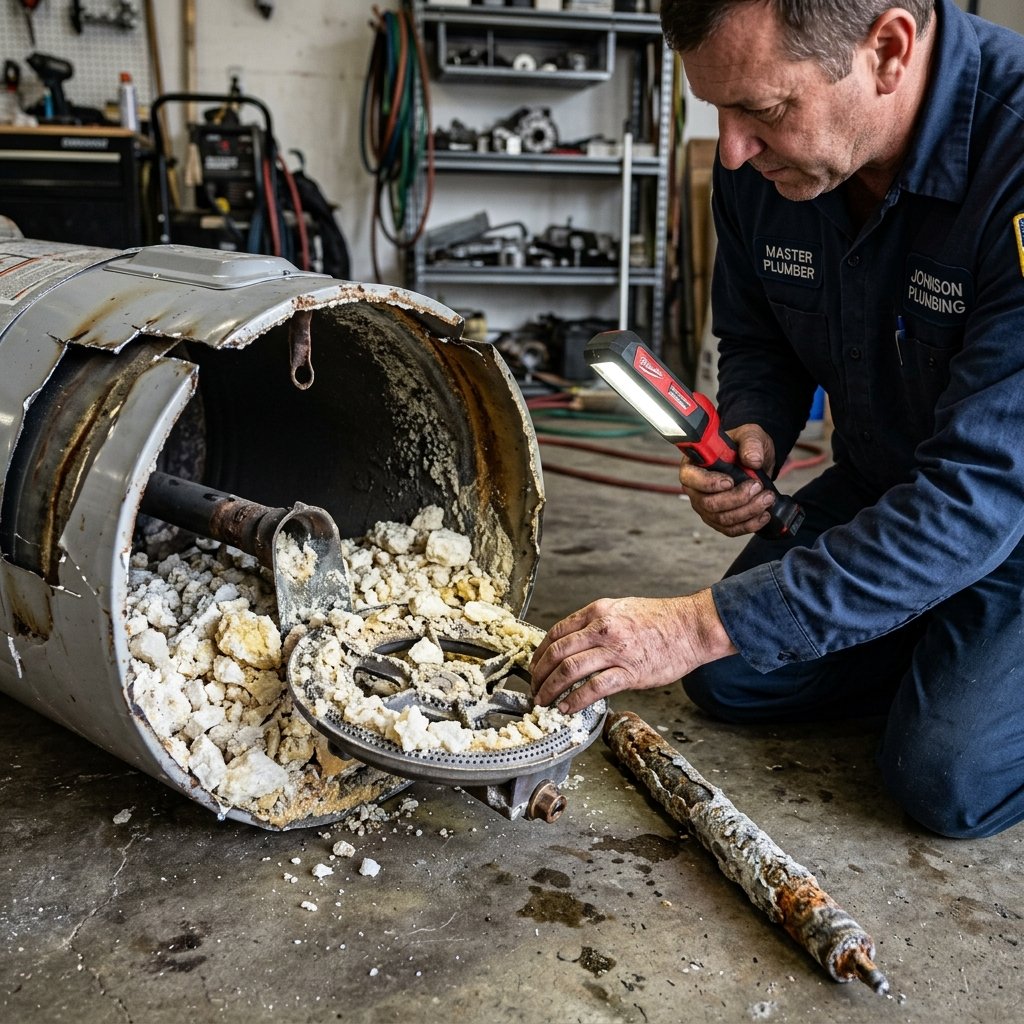
Diagnostic cross-section revealing calcium carbonate scale accumulation inside a residential storage tank, which can reduce heating efficiency and shorten element life.
Still dealing with this issue? You can request a connection with an independent local plumbing provider — there is no fee to submit a request.
Request a ConnectionFrequently asked questions
Looking for water heater repair in your area?
PlumbRoute is a referral service -- request a connection with an independent local plumber serving one of these areas:
24/7 Verified Dispatch · Phoenix AreaWater Heater Repair & Replacement in Scottsdale, AZ
24/7 Verified Dispatch · Scottsdale AreaWater Heater Repair & Replacement in Dallas, TX
24/7 Verified Dispatch · Dallas AreaWater Heater Repair & Replacement in Fort Worth, TX
24/7 Verified Dispatch · Fort Worth AreaWater Heater Repair & Replacement in Plano, TX
24/7 Verified Dispatch · Plano AreaWater Heater Repair & Replacement in Frisco, TX
24/7 Verified Dispatch · Frisco AreaWater Heater Repair & Replacement in Houston, TX
24/7 Verified Dispatch · Houston AreaWater Heater Repair & Replacement in Austin, TX
24/7 Verified Dispatch · Austin AreaWater Heater Repair & Replacement in San Antonio, TX
24/7 Verified Dispatch · San Antonio AreaWater Heater Repair & Replacement in San Diego, CA
24/7 Verified Dispatch · San Diego Area
Need help with this?
Request a connection with an independent local plumbing provider.
PlumbRoute is a referral service, not a plumbing contractor.
Request an Estimate
Tell us about your project so a local provider can follow up with pricing.